Smart WiFi Microphone: Real-Time Audio Streaming on Embedded Hardware
Written by Zak Tresh, Founder & Electronic Engineer, ZTPrototypes · Published 11 March 2026
This project was a compact WiFi microphone with one push button as the entire user interface. Press the button, connect and stream live audio. The device also needed useful battery life and enough recovery logic that a user did not have to understand what the WiFi connection was doing in the background.
The Challenge
Audio makes network problems obvious very quickly. A sensor reading arriving a second late may not matter, while a second of missing audio is immediately noticeable. The same single button also had to cover power, connection and streaming, so there was no screen or secondary interface available when the device was in the wrong state.
Battery life added another constraint. Continuous WiFi activity draws a lot of power for a small embedded device, so we had to look carefully at when the radio was active, what the processor was doing between streams and how much energy was being used in states where the product appeared idle to the user.
We also designed around the fact that real WiFi networks are messy. The microphone needed to recover after a dropout, reconnect without asking the user to intervene and handle short interruptions without turning every brief patch of interference into an obvious gap in the recording. All of that had to sit behind a very simple user interface with no display for detailed status information.
Our Approach
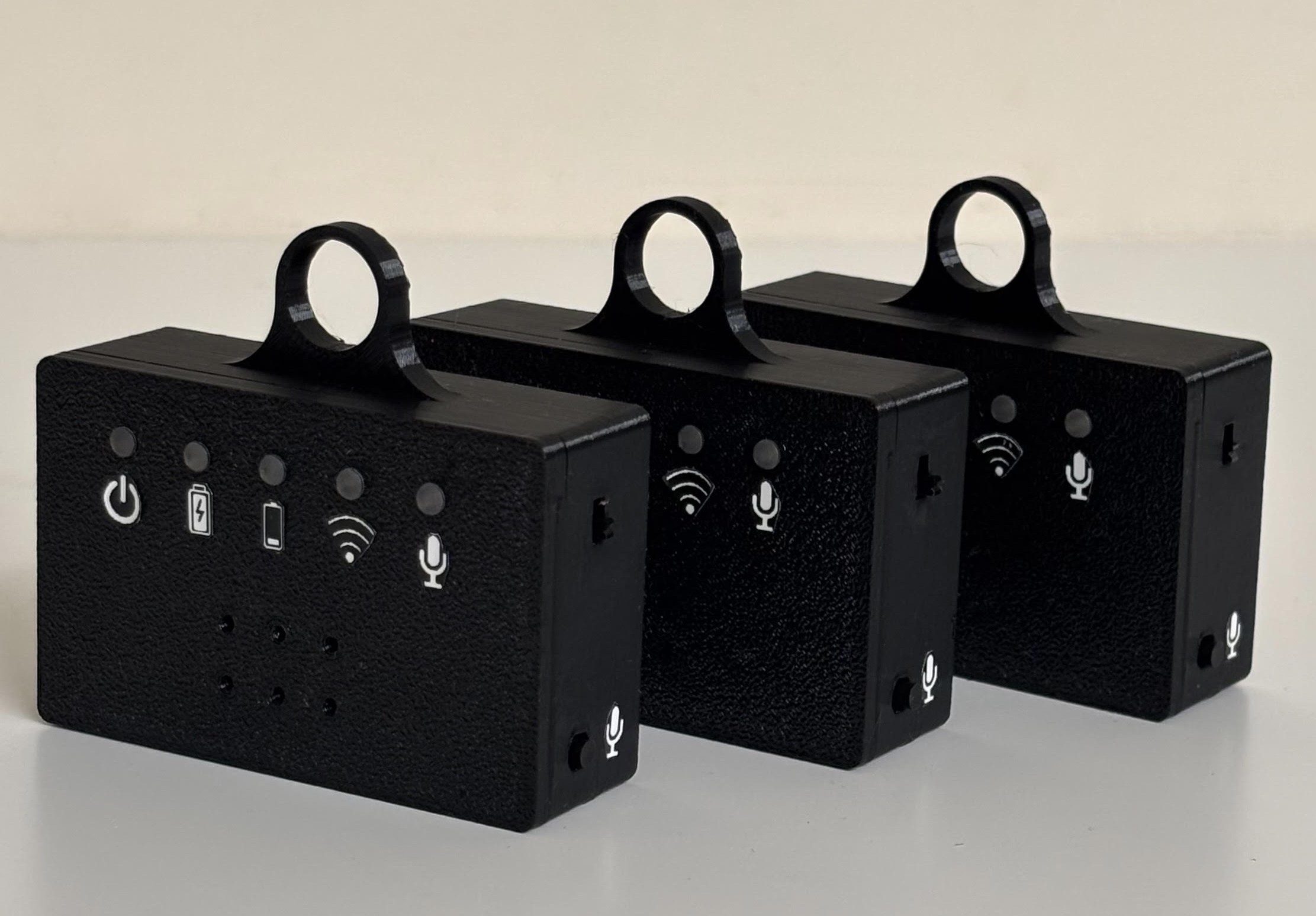
We built the firmware around a clear state machine tied to the button, with defined behaviour for power-up, connection, streaming and recovery. On the audio side, we tuned the buffer size until we had enough protection against normal packet loss without adding a noticeable delay to the stream. Too little buffering produced gaps. Too much made the device feel slow.
The LEDs had to explain what the device was doing without a screen. We used distinct patterns for low battery, searching for WiFi, connected, and actively streaming, so the user could tell the difference between a network problem and a device that was simply waiting for input.
Power management was designed alongside the firmware rather than added once streaming worked. We selected parts and sleep behaviour to reduce consumption when the device was connected but not actively sending audio. We also added automatic reconnection and a short local audio buffer so a brief network interruption could be absorbed while the link recovered.
Outcome
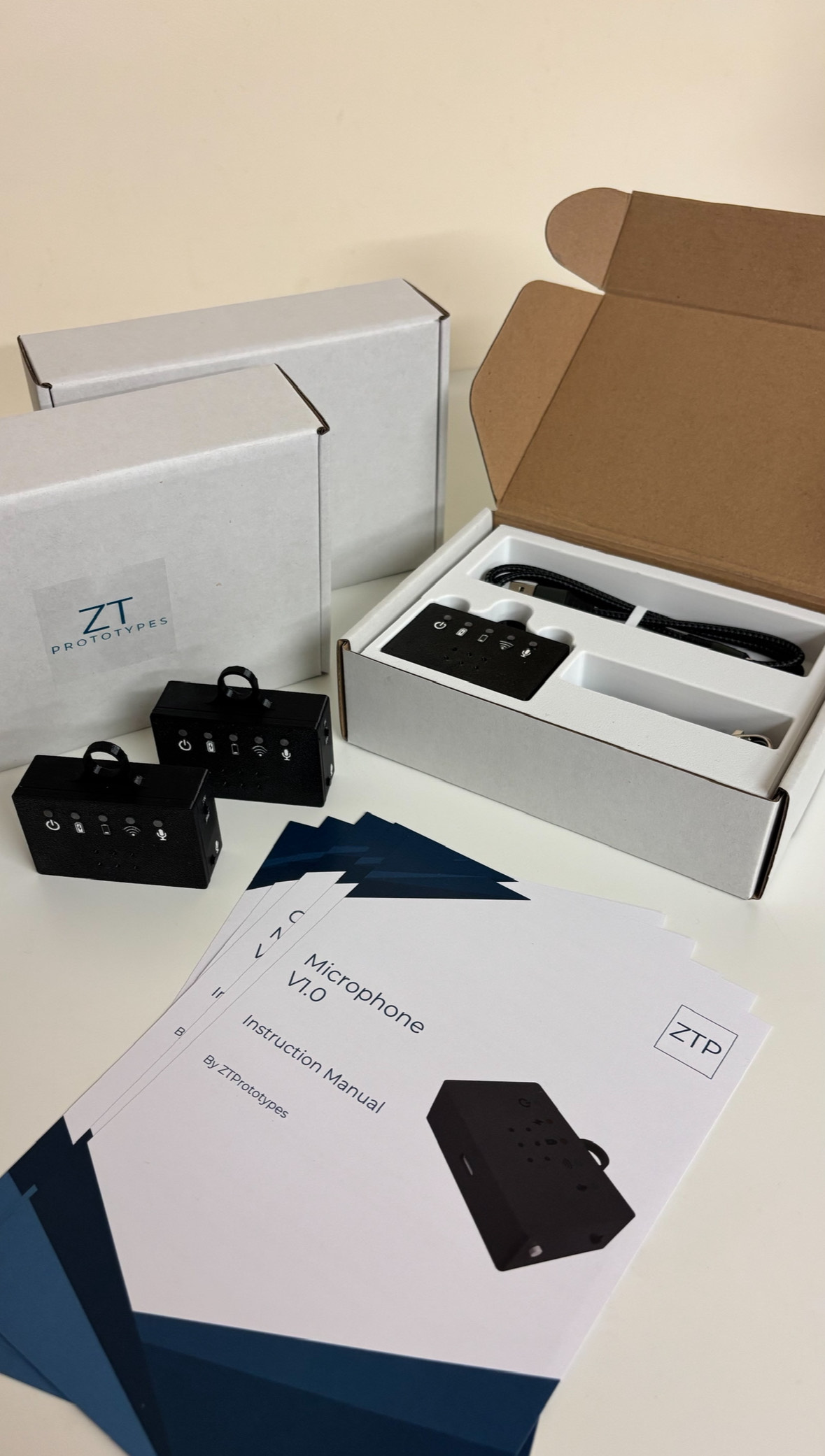
The finished platform streams audio reliably in real time, runs for a useful period on battery and can be operated with a single button. The important part is that the wireless, power and user-interface behaviour all work together without the user needing to manage any of them separately.
What This Demonstrates
Low-latency WiFi audio and long battery life pull the design in different directions. The radio wants to stay active and the buffer wants to stay short for responsiveness, while the battery benefits from reducing radio and processor activity whenever possible. We handled that trade-off in the architecture and firmware instead of relying on a larger battery to hide inefficient behaviour.
The single-button interface also made the firmware structure important. Power, network connection and stream control all had to map onto one input with predictable behaviour in every state. If the state machine is unclear, the product can be technically functional and still feel unreliable because the user has no idea what a button press is going to do next.
Testing on a normal WiFi network mattered as much as the bench work. Home and office networks are shared with other devices, neighbouring access points and changing interference. We deliberately tested reconnection, buffering and stream continuity in those conditions because a clean lab network would only tell us part of the story.
Low-latency wireless streaming, aggressive power optimisation, a firmware architecture built around minimal user interaction, none of that stays confined to audio. Any connected product that needs to feel instant, run for a long time on battery, and stay simple enough for someone non-technical to operate hits the same design tensions, whether it's streaming audio, video, or sensor data. What we learned here shapes how we approach any embedded product where responsiveness and battery life have to sit together instead of trading off against each other.
Building a connected audio or IoT product?
A Validation Sprint identifies exactly where the real technical risk sits in a wireless embedded product, before you commit to a full build, whether that risk is in the RF design, the power budget, or the firmware architecture.
Explore the Validation Sprint