fNIRS Headband: Building an Optical Brain Activity Sensor from Scratch
Written by Zak Tresh, Founder & Electronic Engineer, ZTPrototypes · Published 10 January 2026
Functional near-infrared spectroscopy, or fNIRS, measures changes in brain activity by shining near-infrared light into tissue and measuring how much comes back. Research systems normally cost tens of thousands of pounds. A client asked us to find out whether a working version could be built from scratch, starting from the Analog front end and embedded processing.
The Challenge
The difficult part of fNIRS is the Analog signal. The light that makes it back through the skull and tissue produces a very small electrical signal at the photodiode, while ambient light, movement and the electronics themselves all add noise around it. We needed an Analog front end that could recover that signal reliably, then sample and process it on embedded hardware small enough to wear on the head.
This appealed to us because it meant working from first principles. The technique is usually hidden inside expensive research equipment, so building the sensing chain from scratch meant pushing our own Analog and embedded design work harder than a typical project would.
The mechanical design mattered just as much as the electronics. Small movements between an optical sensor and the skin create motion artefacts, and software filtering can only do so much if the sensor is physically moving during a measurement. We therefore designed the headband to hold each sensing point consistently against the forehead and treated fit, pressure and sensor position as part of the measurement system from the start.
Our Approach
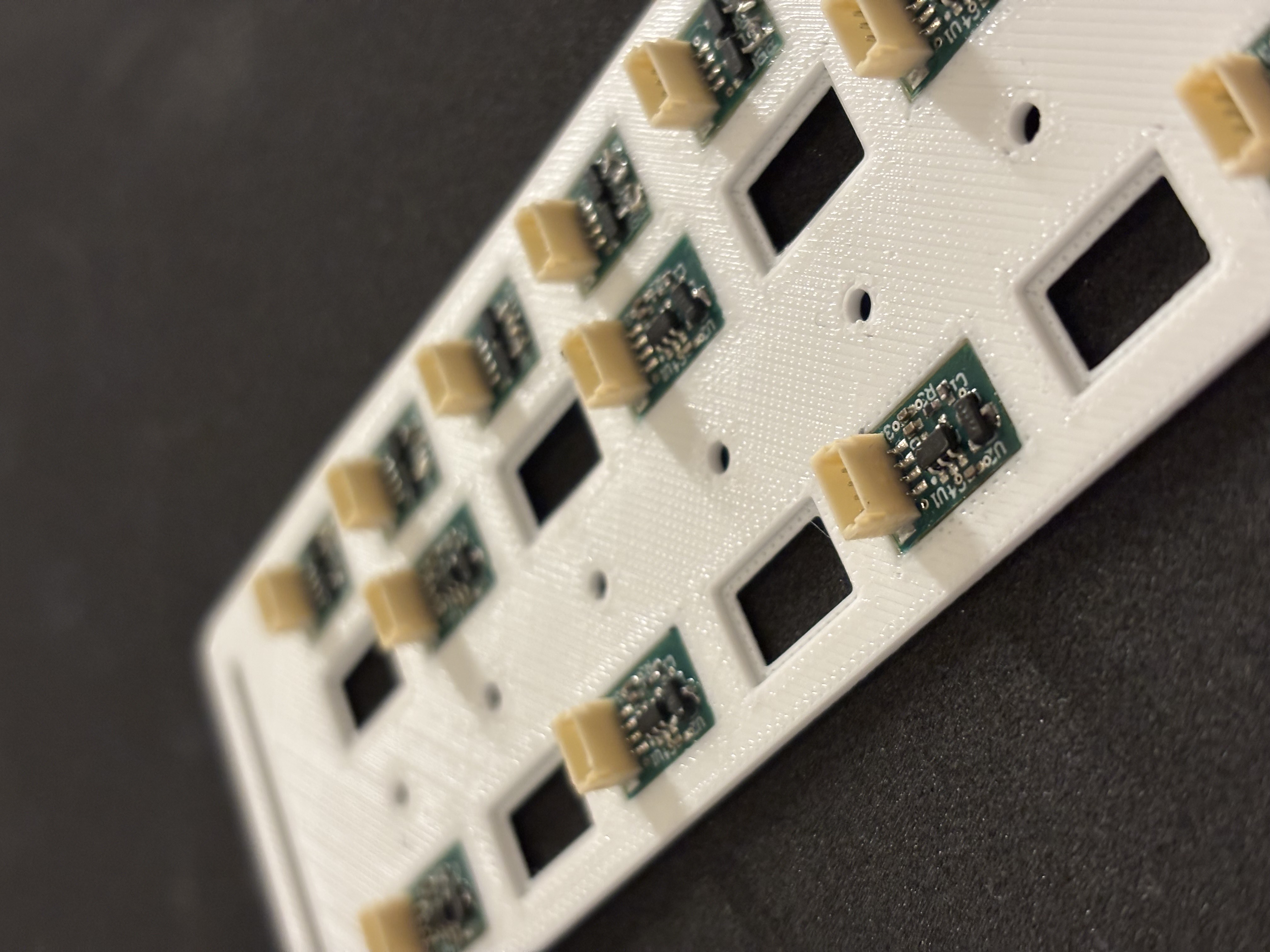
We started with the Analog front end because that was where the useful signal could be lost most easily. We evaluated the photodiodes, transimpedance amplifier gain and filter stages together, then built and tested each sensing channel individually. That made it much easier to find a noisy or faulty channel before the complete array was assembled.
Once the Analog channels were behaving properly on the bench, we added the embedded processing needed to sample, filter and log the data in real time. We then packaged the electronics and sensor array into a headband that could be worn for a full test session without the sensor positions moving around.
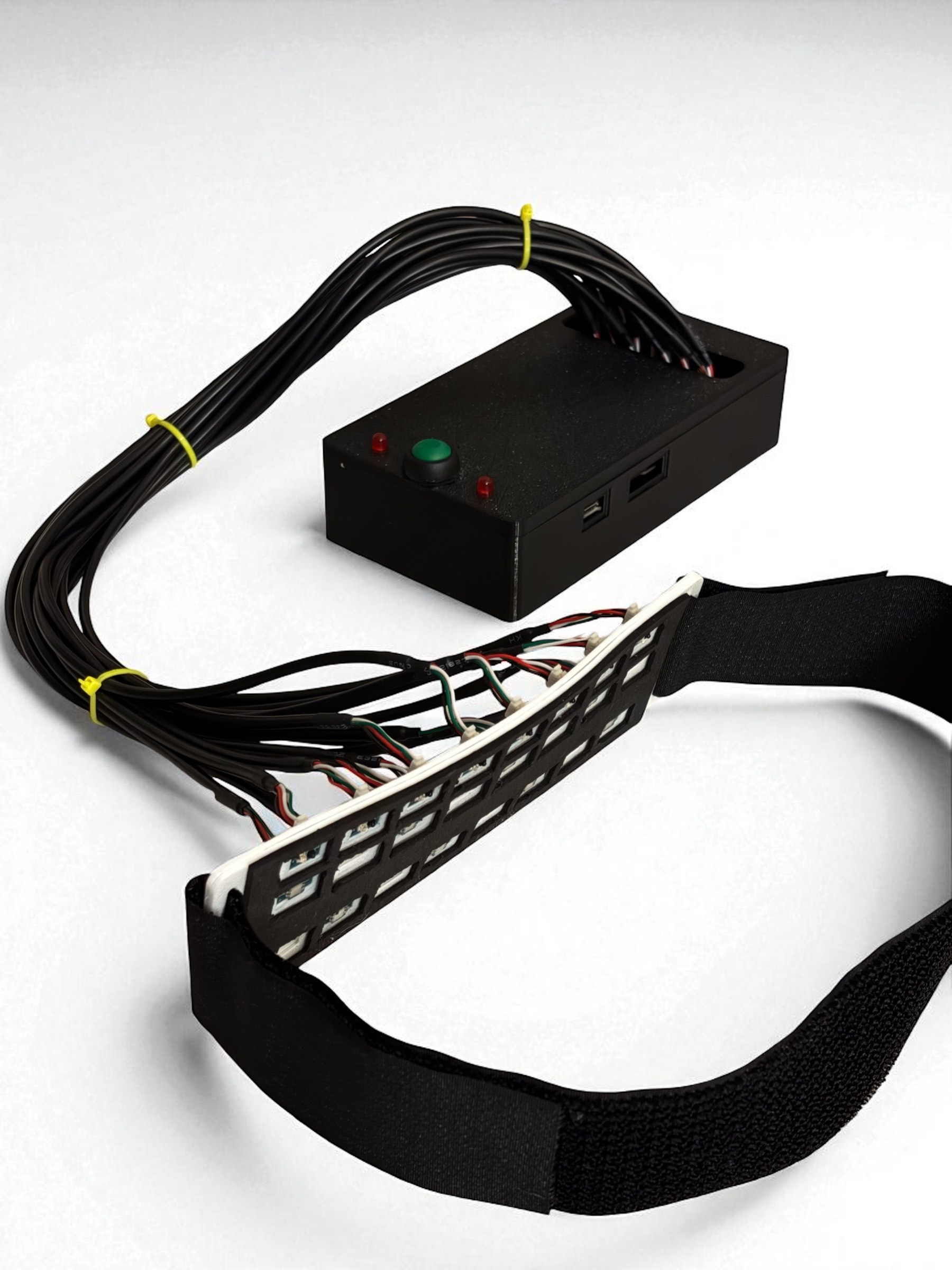
We tested the finished device on ourselves before anyone else used it. We recorded data during controlled tasks and compared the shape of the response with what published fNIRS research predicts for the same type of activity. That gave us a useful benchmark for the complete system before it reached a client evaluation.
Outcome
The finished prototype produced a clear, usable signal. In one recording we alternated between thirty seconds of mental arithmetic and thirty seconds of rest. The measured response rose during the arithmetic periods and dropped again during rest, which is the pattern we expected from published fNIRS work and gave us confidence that the Analog front end was measuring a real physiological change.
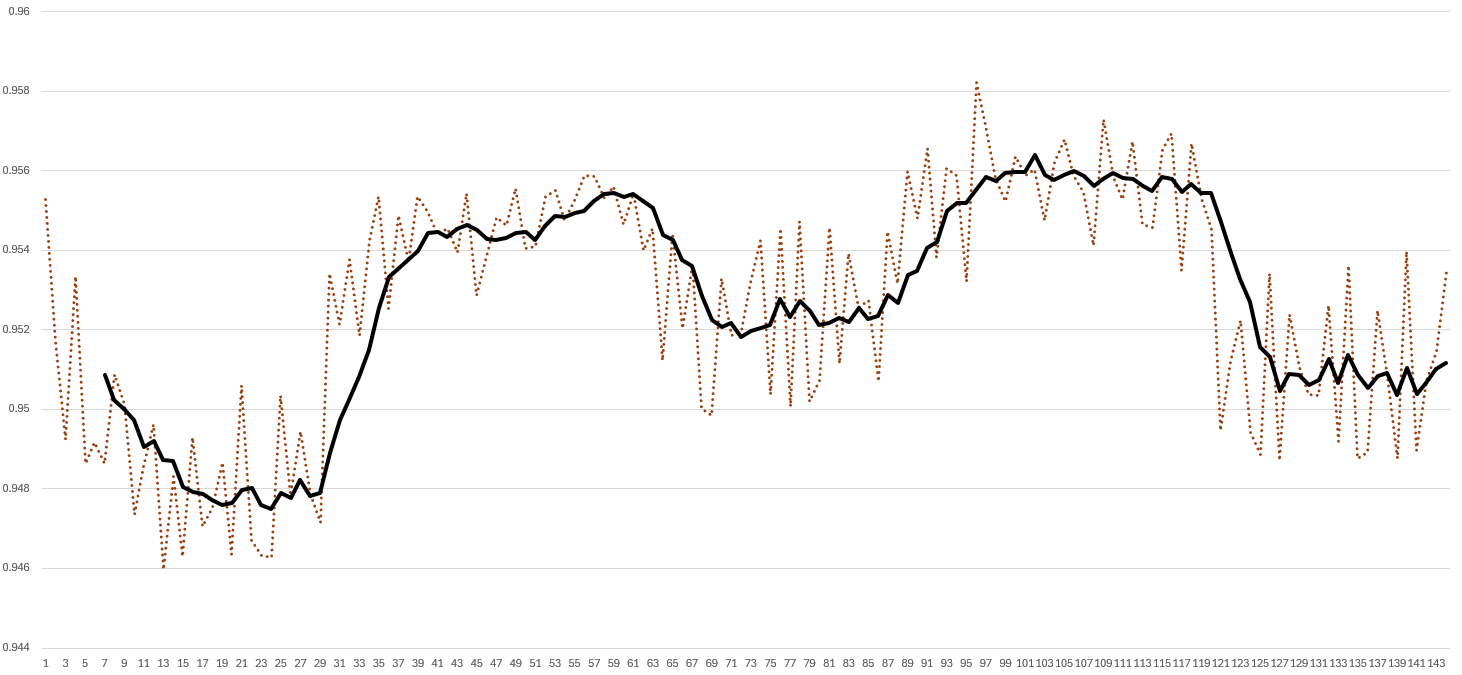
Recorded signal while alternating between 30 seconds of mental arithmetic and 30 seconds of rest.
We published the recording with the project so the result could be judged on the data rather than on a description of the prototype. The work has since led to further interest, and the client is now developing a smaller second version with us using the same underlying sensing approach.
This project shows why the early Analog work matters on sensor products. If the front end has already buried the useful signal in noise, there is very little the firmware can recover later. We spent the time proving the signal chain first, then built the rest of the system around something we knew was actually measurable.
What This Demonstrates
Optical biosensing sits at the harder end of Analog design because the useful signal is extremely small and several different noise sources are present at the same time. Ambient light, motion and the sensing electronics can all affect the result. Building the headband from first principles meant we had to justify the photodiode choice, transimpedance gain and filter topology individually and then verify that they still worked together in the complete wearable.
The useful result here is that we took a measurement technique normally used with expensive lab equipment and built a compact wearable version that produced the expected response on real recorded data. The same combination of precision Analog design, embedded signal processing and physical testing applies to any sensor product where the signal is small, noisy and easy to misinterpret.
Analog sensing is exactly the kind of work that's hard to demonstrate credibly without showing the real data behind it. That approach gave the client genuine confidence in the underlying design, and they're now developing a second miniaturised version with us, building directly on it.
Working on a sensor-driven product idea?
A Validation Sprint is the right starting point for identifying the real technical risk in a sensing or analogue design project before you commit to a full build.
Explore the Validation Sprint